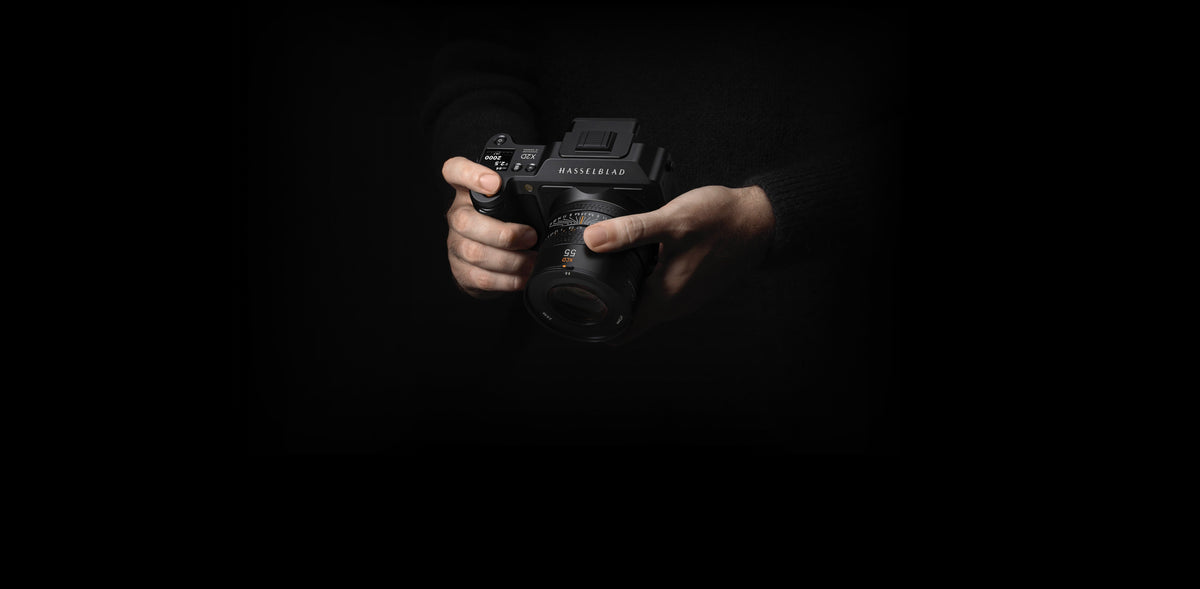
A leaf shutter typically uses overlapping blades within the lens, while a focal-plane shutter uses curtains positioned directly in front of the sensor or film. This structural difference affects flash synchronization, maximum mechanical shutter speed, vibration, sound, and camera system design.
Leaf shutters are particularly useful when flash and ambient light need to be controlled together. Focal-plane shutters generally provide higher maximum mechanical speeds and allow one body-mounted shutter to work with multiple lenses. The significance of each design depends on the subject, lighting method, and photographic workflow.
What Is a Leaf Shutter and How Does It Work?
A leaf shutter is a mechanical shutter usually built into the lens. It uses several overlapping blades that open outward from the optical center and close again to control how long light reaches the sensor or film.
During an exposure, the blades open, allow light to pass through the lens, and close after the selected exposure time. The exact sequence varies by camera and lens. Some digital systems keep the shutter open for live view before preparing it for the exposure.
Leaf shutters are sometimes described as lens shutters or central shutters, depending on their position and mechanical configuration.
The shutter blades may resemble aperture blades, but the two mechanisms perform different functions. The aperture controls the size of the lens opening. The shutter controls the duration of the exposure.
What Is a Focal-Plane Shutter and How Does It Work?
A focal-plane shutter is positioned directly in front of the sensor or film and typically uses two curtains to control exposure. The first curtain begins the exposure, while the second curtain ends it.
At slower shutter speeds, the first curtain clears the image area before the second curtain begins to move. The entire sensor is briefly uncovered.
At faster speeds, the second curtain starts moving before the first curtain completes its travel. The two curtains form a narrow opening that moves across the sensor. Each area receives a short exposure, although different parts of the frame are recorded at slightly different moments.
This moving slit allows a focal-plane shutter to produce short exposure times without uncovering the complete sensor for the full interval. It also creates the conventional flash-sync limitation associated with the design.
What Is the Difference Between a Leaf Shutter and a Focal-Plane Shutter?
The main difference is that a leaf shutter controls exposure from within the lens, while a focal-plane shutter uses curtains that move directly in front of the image area. This affects flash synchronization, maximum mechanical speed, mechanical disturbance, sound, and system construction.
|
Comparison |
Leaf Shutter |
Focal-Plane Shutter |
|
Location |
Usually inside the lens |
Directly in front of the sensor or film |
|
Mechanism |
Overlapping blades open from the center |
Two curtains travel across the image area |
|
Fast Exposure |
Controlled by rapid blade movement |
Created by a moving slit |
|
Conventional Flash Sync |
Typically available throughout the supported shutter-speed range |
Limited to the speed at which the full image area is uncovered |
|
Maximum Mechanical Speed |
Depends on the individual lens |
Often reaches higher maximum speeds |
|
Mechanical Disturbance |
Generally lower |
Curtain movement may introduce more disturbance |
|
Sound |
Often relatively quiet, depending on the design |
Depends on the body and curtain mechanism |
|
System Design |
A shutter is integrated into each compatible lens |
One body shutter works with multiple lenses |
Flash Synchronization and Ambient Light Control
A leaf shutter can typically synchronize a compatible flash throughout its supported shutter-speed range. A focal-plane shutter has a conventional sync limit because its curtains form a moving slit at higher speeds.
A conventional flash produces a brief burst of light. To illuminate the photograph evenly, that burst needs to reach the complete image area during the synchronization window.
At or below a focal-plane shutter’s conventional sync speed, the first curtain clears the sensor before the second curtain begins moving. A single flash can illuminate the entire frame during this interval.
Above the conventional sync speed, the curtains form a moving slit. A conventional flash may illuminate only the uncovered part of the sensor, producing a dark band or incomplete exposure.
A leaf shutter does not form this curtain opening directly in front of the sensor. Its blades operate within the lens, allowing the flash to illuminate the full frame within the supported timing range.
Faster flash synchronization helps reduce ambient exposure while maintaining the flash exposure on the subject. This can preserve a bright background, retain a wider aperture, or define the subject against strong daylight.
Full-speed synchronization refers to every shutter speed supported by the leaf shutter. Actual flash output still depends on flash duration, trigger timing, transmitter compatibility, power level, and subject distance.

@Albrecht Voss
Leaf Shutter Sync and High-Speed Sync
Leaf shutter synchronization uses a conventional flash burst, while high-speed sync uses repeated pulses to cover the movement of a focal-plane shutter’s curtain opening.
High-speed sync, or HSS, allows compatible focal-plane cameras and flashes to operate above the camera’s conventional sync speed. The repeated pulses generally reduce effective flash output and working distance. The practical effect depends on the equipment, shutter speed, power setting, modifier, and subject distance.
A leaf shutter can generally use conventional flash synchronization throughout its supported speed range. This may offer more efficient control of bright ambient light without requiring HSS.
Both methods depend on compatible equipment and appropriate timing. Neither guarantees a fixed output or lighting result under every condition.
Maximum Shutter Speed and Moving Subjects
Focal-plane shutters often provide higher maximum mechanical speeds, while a leaf shutter’s maximum speed depends on the individual lens. Blade diameter, aperture, lens construction, and shutter design can all influence the available range.
Maximum shutter speed and flash-sync speed describe different capabilities. A focal-plane shutter may provide a higher maximum mechanical speed while retaining a lower conventional flash-sync limit. A leaf shutter may offer a lower maximum speed while supporting conventional flash synchronization throughout its range.
Under ambient or continuous light, a shorter exposure can reduce motion blur. A higher focal-plane shutter speed may therefore be useful for rapidly moving subjects in strong available light.
When flash provides most of the exposure, flash duration also affects how motion is rendered. A brief flash can record a defined subject, while ambient light recorded during the exposure may still produce visible movement.
A higher leaf-shutter sync speed gives the photographer more control over this ambient component. It does not independently make every moving subject appear sharper.

@Albrecht Voss
Mechanical Disturbance and Shutter Sound
Leaf shutters generally produce less mechanical disturbance and a softer operating sound than focal-plane shutters, although the result depends on the specific mechanism.
Leaf-shutter blades are relatively small and move over a limited distance around the optical axis. Focal-plane curtains travel across the sensor area and may introduce more mechanical movement.
Lower mechanical disturbance can support fine-detail capture under certain conditions. Accurate focus, appropriate shutter speed, stable support, and careful technique remain essential.
In-body image stabilization, tripod stability, wind, ground movement, and shutter-release technique may have a greater effect in many situations. A leaf shutter should therefore not be described as vibration-free.
Sound also varies across lenses and camera bodies. Shutter diameter, blade speed, body construction, and acoustic design all influence how noticeable the mechanism becomes. A large, high-speed leaf shutter may be more audible than a smaller design.

@Albrecht Voss
Lens and Camera System Design
An interchangeable-lens leaf-shutter system places a separate shutter mechanism inside each compatible lens. A focal-plane system places one mechanical shutter inside the camera body.
Changing leaf-shutter lenses may change the available shutter-speed range. Flash synchronization and exposure operation depend on the mounted lens and its compatibility with the camera.
In a focal-plane system, the body shutter works with different lenses. Maximum mechanical speed and conventional flash-sync speed are therefore usually body specifications.
Shutter location does not determine lens size or weight on its own. Focal length, maximum aperture, image circle, focusing mechanism, optical construction, materials, and sealing also shape the lens.
Does Shutter Type Affect Image Quality?
Shutter type does not directly determine resolution, color reproduction, or dynamic range. These characteristics depend primarily on the sensor or film, lens, exposure, processing, and output workflow.
The shutter can influence the conditions under which detail is recorded. Mechanical disturbance may affect fine detail at certain speeds. Flash synchronization can change the balance between subject light and background light. Incorrect synchronization may produce dark bands or uneven illumination.
A leaf shutter does not add resolution or dynamic range. A focal-plane shutter does not inherently reduce image quality. The visible result depends on how the shutter interacts with movement, light, camera support, and the rest of the imaging system.
Which Shutter Type Suits Different Photography Work?
A leaf shutter is especially relevant to flash-based portrait, studio, product, and location photography, while a focal-plane shutter may better support work that prioritizes high maximum mechanical speeds.
|
Photography Work |
Main Considerations |
Relevant Shutter Characteristics |
|
Outdoor Portraiture |
Fill flash, wide apertures, bright backgrounds |
High flash-sync speed and ambient-light control |
|
Studio and Product Photography |
Strobe control, repeatability, fine detail |
Full-speed flash sync and low mechanical disturbance |
|
Fashion and Commercial Work |
Mixed light, movement, location lighting |
Flash sync, flash duration, and shutter-speed range |
|
Sports and Fast Action |
Rapid movement, autofocus, continuous shooting |
Maximum mechanical speed and complete system performance |
|
Wedding and Documentary Work |
Sound, response, available light, occasional flash |
Shutter sound, synchronization, and camera responsiveness |
|
Landscape and Architecture |
Stability, long exposure, fine detail |
Mechanical disturbance, support, and exposure range |
Shutter type should be considered with lens selection, autofocus, continuous shooting, flash equipment, camera handling, and the intended subject. Its value depends on how these elements support the photographer’s working method.
How Do Leaf Shutters Work in the Hasselblad X System?
Compatible XCD lenses integrate the leaf shutter within the lens and support flash synchronization throughout the shutter-speed range offered by that lens.
This design gives photographers direct control over the relationship between flash and ambient light in portraiture, still life, travel, and location photography. The available shutter-speed range depends on the individual XCD lens.
The XCD 2,8-4/35-100E incorporates a leaf shutter with shutter speeds from 1/4000 second to 68 minutes and flash synchronization at every available speed. This range supports bright-light fill flash, wide-aperture work, and extended exposures within a single lens.
[cta: https://store-na.hasselblad.com/products/xcd-2-8-4-35-100e]
Conclusion
Leaf shutters provide greater flexibility when balancing flash with ambient light, while focal-plane shutters often provide higher maximum mechanical speeds and a body-based shutter system.
The two designs also differ in mechanical disturbance, sound, and how the shutter is incorporated into the camera system. The more suitable configuration depends on the subject, lighting method, lens requirements, and photographic workflow.
Frequently Asked Questions
Can a Leaf Shutter Be Used Without Flash?
Yes. A leaf shutter controls exposure with or without flash. Its synchronization capability becomes especially relevant when flash is used, but the shutter also supports available-light photography throughout the speed range provided by the lens.
Is a Leaf Shutter Suitable for Long Exposures?
It can be. Long-exposure capability depends on the specific lens and camera system rather than the shutter category alone. Some leaf-shutter lenses support exposure times ranging from fast fractions of a second to several minutes.
Does Aperture Affect the Maximum Speed of a Leaf Shutter?
It can in some designs. The shutter blades must move across the lens opening, so blade diameter, selected aperture, and mechanical construction may affect the highest available speed. The individual lens specifications provide the applicable range.
Is a Leaf Shutter the Same as an Electronic Shutter?
No. A leaf shutter uses mechanical blades within the lens. An electronic shutter controls exposure through sensor readout and has different characteristics involving flash compatibility, artificial-light banding, sound, and the rendering of movement.