A camera lens focuses light onto the camera's sensor or film. On a given sensor format, focal length determines the field of view; aperture influences exposure and depth of field; and optical design affects detail, contrast, and the rendering of light. A lens also needs to suit the camera system and the way a photographer works with a subject.
Understanding these characteristics helps you choose for the photograph you want to make, rather than treating one specification as a measure of quality.
What Is a Camera Lens and How Does It Work?
A camera lens uses precisely arranged optical elements to form a focused image on the camera's sensor or film. Its focal length affects the angle of view, while its aperture controls the size of the opening through which light passes. Focusing adjusts the optical system so that a subject at a chosen distance is recorded sharply.
Photographic lenses typically combine optical elements of different shapes and materials. Their arrangement guides incoming light toward the image plane and helps control aberrations such as color fringing and geometric distortion.
Focusing changes the relationship between the lens's optical elements and the image plane. When you focus on a person's eyes rather than the landscape behind them, you're choosing where you want sharp detail to fall. Other objects can appear acceptably sharp or visibly blurred depending on their distance, the aperture, and the resulting depth of field.
A lens also projects an image circle. The sensor records a rectangular portion of that projected image. For an intended camera format, the lens needs sufficient image-circle coverage as well as a compatible mount. That distinction becomes important when using lenses across different camera systems or sensor sizes.
Optics are one part of the image-making process. Exposure, focus accuracy, camera stability, processing, and output conditions also affect the finished photograph.

@Gunther Egger
What Are the Different Types of Camera Lenses?
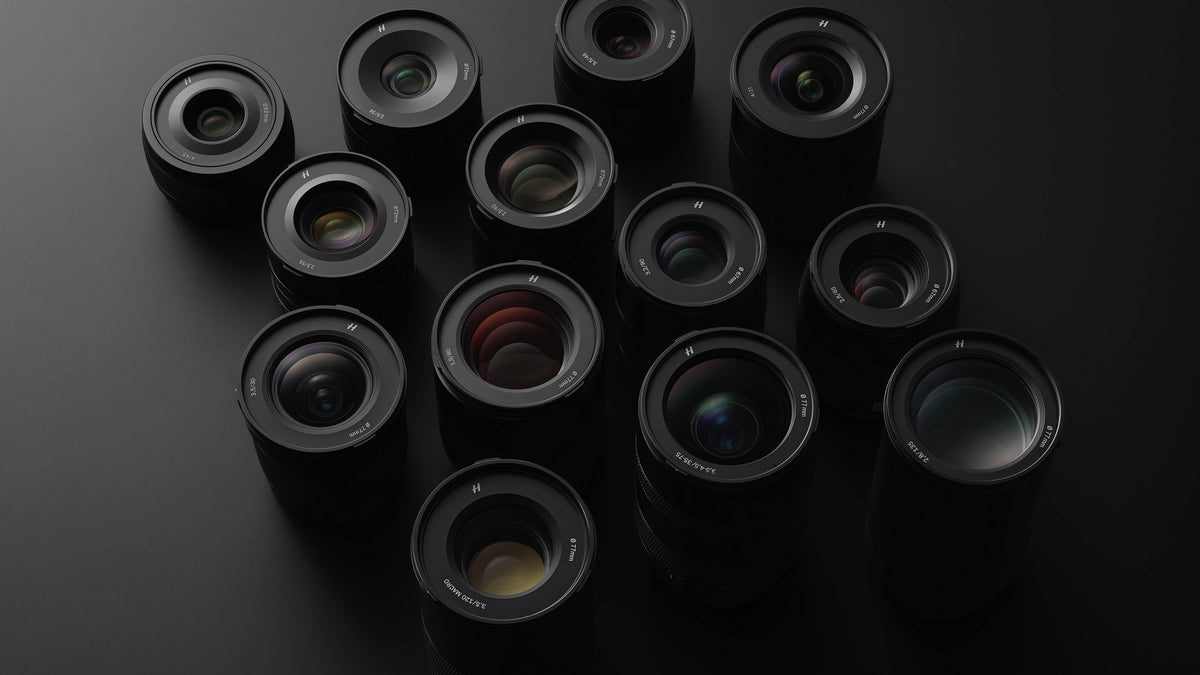
Camera lenses are commonly classified by angle of view, by whether their focal length changes, and by specialized functions such as close-up photography or perspective control. These categories overlap. A lens can be a wide-angle zoom, a telephoto prime, or a macro lens with a standard angle of view.
The table below uses approximate full-frame-equivalent focal lengths as a familiar reference. These are descriptive ranges rather than fixed technical boundaries; the same physical focal length can provide a different angle of view on another sensor format.
|
Lens Type |
Approximate Full-Frame-Equivalent Range |
What It Includes in the Frame |
Common Photographic Uses |
|
Ultra-wide-angle |
Below about 24mm |
Broad spaces and pronounced near-to-far relationships when the camera is close to a subject |
Interiors, architecture, expansive landscapes |
|
Wide-angle |
About 24–35mm |
A subject with more surrounding context |
Environmental portraits, street scenes, travel |
|
Standard |
About 40–60mm |
A relatively balanced relationship between subject and surroundings |
Documentary work, still life, everyday photography |
|
Short telephoto |
About 70–135mm |
A narrower portion of the scene at a given position |
Portraits, details, selective framing |
|
Longer telephoto |
About 135–300mm |
Distant subjects and tightly selected parts of a larger scene |
Wildlife, sports, distant landscape details |
|
Super-telephoto |
Commonly above about 300mm |
Subjects far from the camera, with a particularly narrow field of view |
Distant wildlife and field sports |
|
Macro |
Defined by close-focus capability, not focal length alone |
Small subjects at high reproduction ratios |
Flowers, textures, products, intricate details |
Wide-Angle and Ultra-Wide-Angle Lenses
Wide-angle lenses capture a broad field of view, making it possible to include more of the surroundings without moving farther from the subject. That can be useful in a confined interior or when a landscape's foreground is as important as its distant horizon.
Their expressive potential depends strongly on camera position. Move close to a foreground object with a wide-angle lens and its size relative to the background may appear pronounced. Keep the camera farther away and the same lens can produce a quieter, more expansive composition. If you tilt the camera upward to include a tall building, vertical lines may converge in the image. This is a perspective effect associated with camera orientation, not necessarily a defect in the lens.
Standard Lenses
Standard lenses offer a field of view that many photographers find comfortable for everyday observation, portraits with context, and still life. They aren't a literal match for everything the human eye sees. Rather, they provide a useful balance between including the surroundings and concentrating attention on a subject.
That balance is valuable in documentary photography. A wider view may emphasize the relationship between a person and a place, while a tighter view may remove context that gives the moment meaning. A standard lens can leave room for those decisions without requiring an unusually large change in working distance.
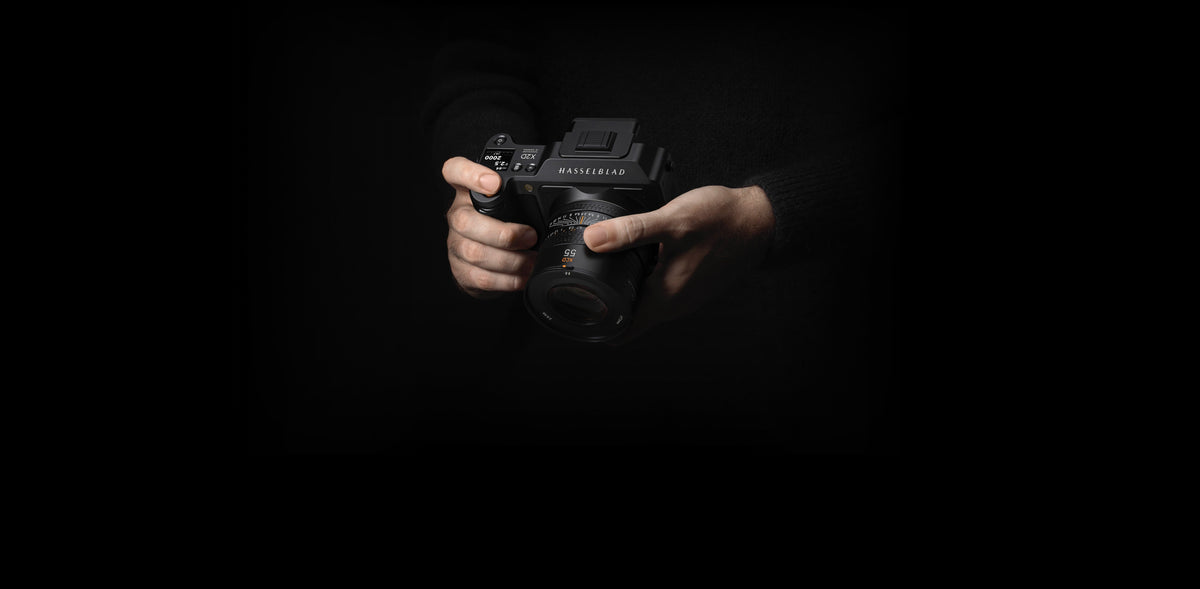
In the X System, the XCD 2,5/55V combines a 55mm focal length, approximately 43mm full-frame-equivalent framing, and an f/2.5 maximum aperture. Its near-standard view can keep a person and their surroundings in balance, making it relevant to documentary and environmental portraiture where context carries part of the story.
[cta: https://store-na.hasselblad.com/products/xcd-55]
Telephoto and Super-Telephoto Lenses
Telephoto lenses capture a narrower angle of view and can frame a subject from a greater distance. They are useful for tighter portraits, distant details, wildlife, and isolating shapes or patterns within a larger landscape. A telephoto lens can be a prime or a zoom; the term describes its optical relationship to the format, not whether it changes focal length.
Working distance is particularly important in portraiture. A longer focal length often allows the photographer to stand farther back while maintaining a similar subject size in the frame. That change in position can alter the apparent proportions of a face and the relationship between foreground and background. The lens does not independently create a different perspective from the same camera position.
For distant subjects, consider the complete system. A longer focal length helps fill the frame, but focus accuracy, shutter speed, camera stability, and the size of the subject within the final image still matter. A narrow field of view alone does not establish how much fine detail the photograph will preserve.
Macro and Specialized Lenses
Macro lenses are designed for close focusing and high magnification, while specialized lenses address particular visual or technical requirements. Macro capability is better evaluated through maximum reproduction ratio and working distance than by focal length alone.
At 1:1 magnification, an object measuring 10mm projects an image measuring approximately 10mm on the sensor. A lens reaching 1:4 projects it at about one-quarter of its actual size. Both can photograph close-up details, but they do not deliver the same magnification. Also check how much room remains between the front of the lens and the subject, especially when lighting small objects.
Other specialized designs include fisheye lenses, which deliberately produce distinctive curved projections, and tilt-shift lenses, which allow adjustments to the plane of focus or framing relative to the image area. Their availability and operation depend on the camera system.

@MatsLind
How Does Focal Length Affect Your Photos?
Focal length affects angle of view and image scale, while sensor size determines how much of the projected image is recorded. Camera position, rather than focal length by itself, determines the perspective relationships between objects at different distances. Understanding these distinctions makes lens choice more deliberate.
Focal Length, Field of View, and Sensor Size
A lens's focal length is expressed in millimeters and is conventionally defined with the lens focused at infinity. On the same sensor format, shorter focal lengths provide a wider view and longer focal lengths provide a narrower one. A 35mm and a 90mm lens therefore produce markedly different framing from the same camera position.
The number printed on the lens is its physical focal length. It doesn't change when the lens is mounted on a different sensor format. What changes is the portion of the image circle recorded by that sensor. A smaller image area generally captures a narrower view from the same lens, provided the camera and lens are compatible.
Because sensor size changes the recorded field of view, photographers use full-frame-equivalent focal length to compare lenses across formats. This is the focal length that would provide a similar angle of view on a 36 × 24mm full-frame camera. Equivalence describes framing; it does not change the lens's physical focal length or aperture.
With the X System's 43.8 × 32.9mm image area, a 35mm lens frames approximately like a 27mm lens on full frame, while a 90mm lens frames approximately like a 71mm lens. These comparisons use diagonal angle of view. Because the sensor formats have different aspect ratios, horizontal and vertical framing will not match exactly.
How Camera Position Changes Perspective
Perspective is determined by where the camera is positioned relative to the scene. If you take a wide-angle and telephoto photograph from exactly the same camera position, the telephoto image records a narrower section of the view. Cropping the wide-angle image to match that section produces the same geometric perspective, though not necessarily the same resolution or optical rendering.
The familiar appearance of telephoto compression usually arises when the photographer moves farther back to keep the subject a similar size in the frame. As that distance changes, the relative apparent sizes of nearer and farther objects change. In a portrait, moving closer can make the nose appear more prominent relative to the ears; moving back can produce a subtler facial proportion. The lens then provides the framing that makes the chosen position practical.
A simple photographic comparison illustrates the distinction:
-
Keep the camera still. Photograph the scene at two focal lengths and compare how much is included. The perspective relationships remain tied to the same viewpoint.
-
Keep the subject similarly framed. Change focal length and move the camera to restore a comparable subject size. Now compare the subject's proportions and the background's apparent size.
For portraits and architecture in particular, establish the camera position for the perspective you want, then select the focal length that gives you the intended framing.
How Does Aperture Affect Exposure and Depth of Field?
Aperture controls the effective size of the opening through which light enters a lens and helps determine how much of a scene appears in acceptable focus. The useful aperture depends on exposure requirements, subject movement, focus distance, and the visual relationship between subject and background.

@Benjamin Everett
Aperture, Light, and Exposure
Aperture is expressed as an f-number, such as f/2.8, f/4, or f/8. The number represents the ratio of focal length to the diameter of the entrance pupil. A lower f-number describes a larger relative opening.
Moving from f/4 to f/2.8 represents approximately one stop of additional light at the same shutter speed, assuming similar lens transmission. This can allow a faster shutter speed or lower ISO for a comparable exposure. Actual transmission differs among optical designs, so equal f-numbers do not guarantee identical sensor exposure.
A lens's maximum aperture is its widest available setting, not the aperture used for every photograph. On a variable-aperture zoom marked f/2.8–4, the widest available aperture changes from f/2.8 at the short end to f/4 at the long end. The working aperture can still be stopped down when greater depth of field is needed.
A wider aperture can help when the available light is limited, particularly if a moving subject requires a faster shutter speed. But it cannot remove motion blur when the exposure remains too long for the subject's movement. Nor can camera stabilization alone freeze a person walking through the frame. When the subject is stationary, a tripod or longer exposure may solve a low-light problem without requiring a faster lens.
Depth of Field and Background Blur
Depth of field describes the range of distances that appear acceptably sharp in a photograph. A wider aperture generally produces shallower depth of field with other conditions held constant; stopping down generally increases it. The visible result also depends on focal length, focusing distance, magnification, sensor format, and the size at which the image is viewed.
Background blur is related to depth of field but isn't determined by aperture alone. The distance between subject and background matters, as does the distance from camera to subject. A portrait photographed near the subject with a background far behind can show substantial separation, while a subject against a nearby wall may retain more background detail even at a relatively wide aperture.
The quality of out-of-focus rendering is another consideration. Bokeh describes how blurred regions and highlights appear, including their shape, texture, and transitions. Two lenses with similar focal lengths and maximum apertures can render those areas differently because of their optical design and aperture construction.
For a single portrait, shallow depth of field may isolate the eyes from a busy background. For a group portrait, still life, or layered landscape, it may leave important parts of the scene out of focus. Stopping down can help, although very small apertures can introduce diffraction that reduces fine-detail contrast. The more suitable setting is the one that supports the intended balance between depth and optical detail.
Prime vs. Zoom Lenses: What's the Difference?
A prime lens has one fixed focal length; a zoom lens allows the focal length to change. This affects how a photographer frames subjects, how often lenses need to be changed, and which optical or handling tradeoffs are relevant. Neither category is inherently superior in image quality.
|
Decision Factor |
Prime Lens |
Zoom Lens |
|
Framing |
Change camera position or crop to adjust composition while keeping one focal length |
Adjust focal length to change framing without changing position |
|
Maximum aperture |
Some primes offer especially wide apertures |
Depends on design; may be constant or variable across the range |
|
Optical performance |
Depends on the individual optical design |
Depends on the individual optical design; modern zooms can perform at a high level |
|
Carrying a kit |
One lens can be compact, but several focal lengths may mean several lenses |
One zoom can cover a range otherwise requiring multiple primes |
|
Working method |
Encourages deliberate choices around one angle of view |
Useful when subject distance or the scene changes quickly |
With a prime, changing the framing may require the photographer to move or recompose; that movement also changes perspective. A zoom permits framing adjustments from a chosen vantage point, which is useful when access is limited or a subject changes position.
The XCD 2,8-4/35-100E covers a view comparable to approximately 28–76mm on full frame, moving from environmental scenes to tighter portraits without changing lenses. Its variable f/2.8–4 maximum aperture and 894g weight, excluding caps and lens shade, are relevant considerations for exposure and handling. The value of that range depends on whether a photographer needs to respond quickly or prefers to work within one fixed field of view.
[cta: https://store-na.hasselblad.com/products/xcd-2-8-4-35-100e]
How Do You Read Camera Lens Specifications?
Read a lens specification as a description of what the lens allows you to do, not as a ranking of quality. Start with the mount and image coverage, then identify focal length, maximum aperture, close-focus capability, focusing controls, and physical size. Each answers a different practical question.
Understanding Lens Names and Numbers
A lens name generally identifies the lens family, nominal focal length, and maximum aperture. In the XCD zoom discussed above, 2,8–4 denotes its variable maximum aperture and 35–100 the nominal zoom range. Its optical specifications give a focal-length range of 36–97mm, illustrating why a model name and the measured design values may differ slightly.
Those numbers describe framing and aperture options. They do not establish close-focus ability, optical performance, focusing behavior, or camera compatibility, which should be assessed separately.
Compatibility, Close Focus, and Handling
Mount compatibility comes before optical preference. A lens needs the right physical and electronic interface for the camera. Image-circle coverage also matters: a lens designed for a smaller image area may not cover a larger sensor, even if an adapter can physically connect it. Adapted lenses may lose autofocus, aperture control, or shutter functions, depending on the combination.
Next, examine capabilities that are easy to overlook:
|
Specification |
What It Means |
Why It Matters |
|
Minimum focusing distance |
The nearest focus distance, often measured from the sensor or film plane |
Determines how close the lens can focus, but not magnification by itself |
|
Maximum magnification |
The size of the subject's image on the sensor relative to the actual subject |
Helps judge close-up capability more directly than focal length |
|
Autofocus and manual-focus control |
How the lens and body establish and adjust focus |
Affects response to movement and fine, deliberate focusing |
|
Filter thread |
The front thread diameter, usually in millimeters |
Determines compatibility with screw-in filters and some accessories |
|
Weight and physical length |
The size of the lens in a working kit |
Influences balance, portability, tripod use, and extended handheld work |
|
Shutter design and compatibility |
Whether exposure control involves an in-lens or body shutter |
Can affect flash synchronization and the available exposure range |
Minimum focusing distance is commonly measured from the image plane, not from the front of the lens. It is therefore different from the working distance, which affects how much room is available to light a small subject. Maximum magnification tells you more directly how large that subject can appear on the sensor.
In the X System, compatible XCD lenses integrate a leaf shutter. With appropriate camera and flash equipment, the shutter can synchronize flash throughout the speed range supported by that lens. This may be useful when balancing flash-lit subjects against bright ambient light in portraits or commercial photography. The available speeds depend on the specific lens.
What Determines Camera Lens Image Quality?
Lens image quality depends on how faithfully the optics reproduce fine detail, contrast, shapes, and light across the frame. Sharpness is important, but it is only one dimension. The final photograph also reflects how light is recorded and processed, as well as focus accuracy, aperture, shutter speed, and camera stability.
Sharpness, Resolution, and Contrast Across the Frame
Resolution concerns the ability to reproduce fine detail, while contrast describes how distinctly differences in brightness are preserved. A lens may render large shapes with strong contrast yet reproduce very fine textures less clearly. Performance can also vary between the center, mid-frame, and edges, or across different apertures and focal lengths.
Modulation Transfer Function (MTF) charts describe how well an optical system transfers contrast at specified spatial frequencies and positions within the image. They can help compare design characteristics, but the testing method, aperture, focus distance, and whether the curves are calculated or measured all affect interpretation. One MTF curve should not be mistaken for a complete prediction of a real photograph.
A high-resolution sensor makes weaknesses in focus, camera stability, and optical detail easier to examine, especially in large prints or significant crops. It doesn't make every picture sharper automatically. For landscapes with important edge detail, inspect the full frame at the intended aperture. For a portrait with a deliberately softened background, sharpness at the point of focus and the transitions around it may matter more than extreme edge resolution.
Diffraction is another reason not to assess sharpness at one aperture alone. Stopping down can improve depth of field or reduce certain aberrations, but at sufficiently small apertures it also spreads point details through diffraction. The balance depends on sensor sampling, subject depth, lens performance, and output requirements.
Distortion, Chromatic Aberration, and Vignetting
Optical aberrations alter the shape, color, or brightness of details in ways that may be visible in the final image. Their importance depends on the subject and the intended use:
|
Optical Characteristic |
How It Appears |
Where You May Notice It |
|
Geometric distortion |
Straight lines may bow outward or inward |
Architecture, interiors, product photography |
|
Lateral chromatic aberration |
Colored fringes around high-contrast edges, often toward the corners |
Backlit branches, fine architectural details |
|
Longitudinal chromatic aberration |
Color fringing in front of or behind the focus plane |
Wide-aperture portraits, reflective details |
|
Vignetting |
Darkening toward the image corners |
Even-toned backgrounds, skies, studio backdrops |
|
Field curvature |
The surface of sharp focus departs from a flat plane |
Flat artwork, documents, subjects spanning the frame |
These effects are not automatically unacceptable. Some darkening toward the corners can support the atmosphere of a photograph, while the same characteristic may be undesirable when reproducing artwork or documenting architectural materials. The important question is whether the effect serves the image or interferes with accuracy.
Optical distortion should also be distinguished from perspective convergence. Keeping the camera level helps maintain parallel verticals in https://store-na.hasselblad.com/pages/architecture-photography; choosing a low-distortion lens helps keep those lines straight within the image. They solve different problems.
Flare, Ghosting, and Lens Corrections
Strong light entering or striking a lens can reduce contrast or produce reflections and flare artifacts. Lens coatings, internal surfaces, hood design, and the position of the light source all influence the outcome. A bright source near the edge of the frame may reveal behavior that is barely visible under diffuse light.
In a backlit portrait, flare can lower contrast around hair and skin. In a night cityscape, internal reflections may create visible spots or shapes around bright lamps. These may be used deliberately, but photographers who need clean tonal separation should assess how the lens behaves in demanding light, not just in a neutral test scene.
Digital lens profiles can correct some distortion, vignetting, and lateral chromatic aberration. Corrections are not a substitute for good optics, nor are they without potential tradeoffs. Geometric correction may change cropping or redistribute detail near the frame edges. Flare and lost contrast are less straightforward to reconstruct after capture. The available correction workflow also depends on the camera, software, lens profile, and file format.
Which Camera Lenses Suit Different Photography Styles?
A useful lens choice begins with your working distance, the amount of context you want in the frame, the available light, and the details that matter in the finished photograph. Different photography styles suggest useful starting points, but they don’t dictate a single focal length.
|
Photography Style |
Main Lens Decision |
What Can Change the Choice |
|
Portrait |
Working distance, perspective, depth of field, background relationship |
Environmental versus tight portrait; room size; subject movement |
|
Landscape |
Field of view, corner detail, foreground-to-background composition |
Broad vista versus distant detail; need for filters; camera support |
|
Street and documentary |
Comfortable working distance, responsiveness, portability |
How close you want to be and how much context the story needs |
|
Travel |
Focal-length range, handling, and weight of the full kit |
Time for lens changes, available space, changing subjects |
|
Architecture and interiors |
Framing, distortion, perspective control, edge performance |
Camera position, confined space, precision of straight lines |
|
Macro and still life |
Magnification, working distance, depth of field |
Subject size, lighting access, need for precise focus |
|
Wildlife and action |
Angle of view at distance, autofocus behavior, exposure speed |
Subject movement, distance, system responsiveness |
In portraiture, a room's dimensions and the desired relationship between the subject and setting help determine working distance. A medium-format portrait can preserve environmental context or concentrate attention on an expression, depending on position, framing, and depth of field.
In landscape photography, a wide view can connect foreground forms with the horizon, while a narrower view can concentrate on distant ridges and light. Where the surrounding space is integral to the composition, the XCD 3,2-4,5/20-35E offers approximately 16–27mm full-frame-equivalent framing. That range allows a shift between expansive and more selective wide compositions from the same camera position.
[cta: https://store-na.hasselblad.com/products/xcd-20-35e]
How Do You Choose the Right Camera Lens?
Choose a lens by identifying what your current equipment prevents you from photographing as intended, then matching that need to a specific optical or handling capability. A different focal length, a wider aperture, or greater close-focus magnification solves different problems; some images call instead for a change in technique.
Identify What Your Current Lens Cannot Do
Before adding a lens, review the photographs you've recently made and the frames you couldn't achieve. Was the subject too small, the room too tight, the background too busy, or the shutter speed too slow? Each points to a different decision.
|
The Problem You Notice |
What to Examine First |
A New Lens May Help If... |
|
You cannot fit enough of the scene into the frame |
Shooting position, current shortest focal length, sensor crop |
You regularly need a wider field of view and cannot move back |
|
A distant subject remains too small |
Practical working distance, current longest focal length, final crop |
More subject scale is needed without moving closer |
|
Moving people appear blurred indoors |
Shutter speed, ISO, available light, maximum aperture |
A wider maximum aperture would enable a useful exposure change |
|
Backgrounds feel too distracting |
Camera position, subject-to-background distance, aperture |
Different framing or aperture options offer the separation you want |
|
Small subjects cannot fill the frame |
Maximum magnification, working distance, close-focus capability |
The current lens cannot reproduce the subject at the required scale |
|
Your kit interrupts the way you shoot |
Frequency of lens changes, weight, preferred focal lengths |
A different prime or zoom would support your working rhythm |
If your current zoom already covers 35mm and 50mm, try those settings before choosing a prime solely for its focal length. A prime could still offer a wider maximum aperture, different handling, or a rendering you prefer, but the framing alone may not change.
Moving the camera, adding support for a static scene, changing the lighting, or refining focus technique can sometimes produce the intended result with your existing lens. A new lens becomes easier to evaluate once the remaining limitation is clear.
Match Lens Features to Your Photography Needs
With the limitation defined, assess the lens in this order:
-
Confirm system compatibility. Check the camera mount, image-circle coverage, and whether autofocus, aperture, shutter, and other functions operate in the intended setup.
-
Choose your working perspective and framing. Consider how close you want to stand, whether you can move, and which angle of view allows the composition you have in mind.
-
Determine the light and focus requirements. Decide whether maximum aperture, subject movement, depth of field, or close-focus capability is the actual constraint.
-
Evaluate optical performance at the settings you'll use. Look beyond a headline sharpness claim to relevant apertures, frame positions, flare conditions, and real photographic output.
-
Consider the complete working kit. Weight, balance, controls, filter sizes, and how often you change lenses affect the photographs you're able and willing to make.
Within the XCD lens range, the choice between a prime and a zoom follows the same principle: how much framing flexibility is useful at the working distance you prefer.
Frequently Asked Questions
Is a 35mm or 50mm Lens Better for Street Photography?
On a full-frame camera, a 35mm lens includes more of the surrounding scene, while a 50mm lens provides tighter framing from the same position. The choice depends on your working distance and how much environmental context contributes to the photograph.
How Can You Tell Whether Image Softness Comes From the Lens?
Photograph a detailed, stationary subject with stable camera support and carefully checked focus. Compare images at several aperture settings and inspect the center and edges. Focus errors, camera movement, and optical performance can produce different patterns of softness.
Does Weather Resistance Mean a Camera Lens Is Waterproof?
No. Weather-resistant construction may help limit dust and moisture entering a lens, but it does not necessarily make the lens waterproof. Protection varies by model and can depend on the camera-lens combination, so the relevant operating guidance matters in wet conditions.