Camera sensor size is the physical area that records the light entering a camera. It can influence image quality, field of view, depth of field, lens size, and the overall portability of a camera system.
A larger sensor may provide more room for resolution, tonal information, and control over depth of field. That does not mean a larger format will produce a stronger photograph in every situation. Lens performance, exposure, focus, stabilization, sensor technology, and image processing remain equally important.
Understanding these relationships is more useful than treating sensor formats as a simple ranking. Each size creates a different balance between image quality, speed, reach, portability, and creative control.
What Is Camera Sensor Size?
Camera sensor size refers to the physical width and height of the light-sensitive surface inside a digital camera.
The sensor receives the image projected by the lens and converts that light into digital information. Its dimensions determine how much of the lens’s image circle is recorded and help shape the optical characteristics of the complete camera system.
Sensor size is not the same as megapixel count. Size describes the physical imaging area, while megapixels describe how many pixels are arranged across that area. Two sensors can have similar dimensions but different resolutions. They can also have the same resolution while differing substantially in size.
What Does a Camera Sensor Do?
A camera sensor records the pattern of light formed by the lens.
Each part of the sensor measures a small portion of that light. The camera then processes the captured information to build the final image, including its color, brightness, and fine detail.
The sensor is one stage in a longer imaging process. It cannot recover detail that the lens failed to resolve, and it cannot correct motion blur or missed focus after capture. Image quality depends on how the sensor, lens, exposure, focus system, and photographer’s technique work together.
How Is Sensor Size Measured?
Camera sensor size is usually expressed as width by height in millimeters.
Full frame, for example, measures approximately 36 × 24 mm. A sensor measuring 43.8 × 32.9 mm has greater width, height, and total imaging area.
Area is important because a relatively modest change in each dimension can create a much larger difference across the complete surface. Comparing width alone does not show the full relationship.
Sensor dimensions also reveal the native aspect ratio. A 36 × 24 mm sensor uses a 3:2 ratio, while a 17.3 × 13.0 mm sensor uses a 4:3 ratio. Cameras may offer additional cropped ratios, but the native dimensions determine the sensor’s complete recording area.

@Junsong He
Why Do Some Sensor Sizes Use Inch-Type Names?
Inch-type sensor names are historical format labels rather than literal measurements.
A 1-inch-type sensor does not measure one inch across. Its active imaging area is commonly about 13.2 × 8.8 mm. Names such as 1/1.8-inch type and 1/2.3-inch type follow the same historical convention.
The fractions can appear counterintuitive. A 1/1.8-inch-type sensor is generally larger than a 1/2.3-inch-type sensor because the smaller denominator indicates the larger optical format.
For an accurate comparison, the sensor’s dimensions in millimeters are more useful than the inch-type label.
Camera Sensor Size Comparison Chart
The main camera sensor formats range from small inch-type sensors to medium format. The table below provides approximate dimensions and crop factors for the formats most often encountered in photography.
Exact measurements can vary within a format, particularly in APS-C, smartphone, and medium-format systems.
|
Sensor Format |
Approximate Dimensions |
Approximate Crop Factor |
Typical System Characteristics |
|
Small inch type |
Varies, often under 10 mm wide |
Varies |
Very compact cameras and lenses |
|
1-inch type |
13.2 × 8.8 mm |
2.7× |
Compact bodies with more imaging area than many small-sensor systems |
|
Micro Four Thirds |
17.3 × 13.0 mm |
2.0× |
Portable interchangeable-lens systems and useful depth of field |
|
APS-C |
About 22–24 × 15–16 mm |
About 1.5×–1.6× |
Balance of image quality, reach, system size, and lens choice |
|
Full frame |
36 × 24 mm |
1.0× |
Broad lens selection and flexible depth-of-field control |
|
Medium format |
Varies; 43.8 × 32.9 mm in the Hasselblad X System |
About 0.79× |
Larger imaging area for detailed, tonal, and color-critical work |
Crop factor compares a format’s field of view with 36 × 24 mm full frame. It does not change a lens’s physical focal length or create additional optical magnification.
What Are the Main Camera Sensor Sizes?
The main camera sensor sizes are small inch-type, 1-inch type, Micro Four Thirds, APS-C, full frame, and medium format.
Each format represents a different relationship between sensor area and the rest of the camera system. Smaller formats may support lighter equipment and greater depth of field. Larger formats may provide more imaging area for resolution, tonal range, and selective focus.
Small Inch-Type Sensors
Small inch-type sensors prioritize compact dimensions and extensive depth of field.
They are commonly found in smartphones, compact imaging devices, and cameras that must remain small or lightweight. Their limited surface area allows the lens and camera body to be reduced in size.
Modern processing can combine multiple frames, reduce noise, balance highlights and shadows, and sharpen fine structures. These methods can produce convincing results, particularly in favorable light and at modest display sizes.
The smaller imaging area may become more apparent in difficult light or during extensive editing. Results depend heavily on exposure, lens quality, stabilization, and the processing applied to the image.
1-Inch-Type Sensors
A 1-inch-type sensor offers more imaging area than many small compact-camera and smartphone sensors while remaining relatively portable.
At approximately 13.2 × 8.8 mm, it can support a useful balance between camera size and image quality. It may suit travel, everyday photography, and compact video systems where carrying a larger interchangeable-lens setup would be impractical.
Compared with larger formats, it generally provides more depth of field at an equivalent angle of view and aperture. This can help when the photographer wants several parts of the scene to remain clear.
Its limitations may become more visible at high sensitivities, during substantial shadow recovery, or when very shallow depth of field is central to the image.

@Mark McGee
Micro Four Thirds
Micro Four Thirds uses a sensor measuring approximately 17.3 × 13.0 mm and has a crop factor of about 2.0×.
The format can support relatively compact camera bodies and lenses, including telephoto lenses that are easier to carry than larger-format equivalents. It may be practical for travel, wildlife, documentary work, and situations that benefit from greater depth of field.
A 25 mm lens on this format provides an angle of view comparable to a 50 mm lens on full frame. The lens itself remains 25 mm. Only the recorded field of view changes.
The format’s characteristics can be advantageous when portability, subject reach, or keeping more of the scene in focus matters more than producing very shallow background separation.
APS-C
APS-C offers a middle ground between compact formats and full frame.
Its dimensions vary, but most APS-C sensors are approximately 22–24 mm wide and 15–16 mm high. The crop factor is usually about 1.5× or 1.6×.
The format can deliver high resolution and broad photographic flexibility without requiring the size and weight associated with some larger systems. It may suit travel, street photography, wildlife, sports, portraiture, and general creative work.
The narrower angle of view can help distant subjects fill more of the frame with a given lens. This does not increase the lens’s magnification. It records a smaller portion of the projected image.
APS-C should be understood as a complete format rather than a reduced substitute for full frame. Its value lies in the balance it creates among image quality, lens size, reach, handling, and cost.
Full Frame
Full frame uses an imaging area of approximately 36 × 24 mm.
It serves as the reference format for crop factor and equivalent focal length. A crop factor of 1.0× means that the stated focal length can be used directly when discussing its full-frame angle of view.
The format can support high resolution, flexible depth-of-field control, and a broad range of lens designs. Depending on the camera, it may also provide fast autofocus and shooting performance for subjects that change quickly.
Full frame is neither the minimum requirement for professional photography nor the natural endpoint for every photographer. Smaller formats may offer a more portable system, while larger formats may provide additional imaging area for work that depends on fine tonal and color information.
Medium Format
Medium format is a category of sensors larger than full frame rather than one fixed dimension.
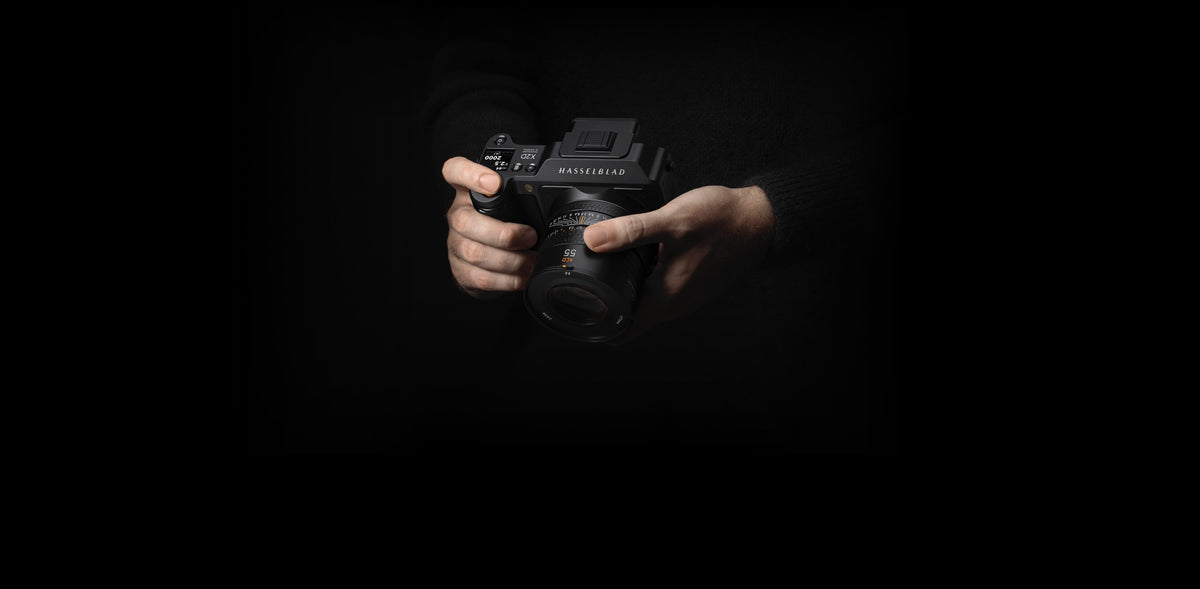
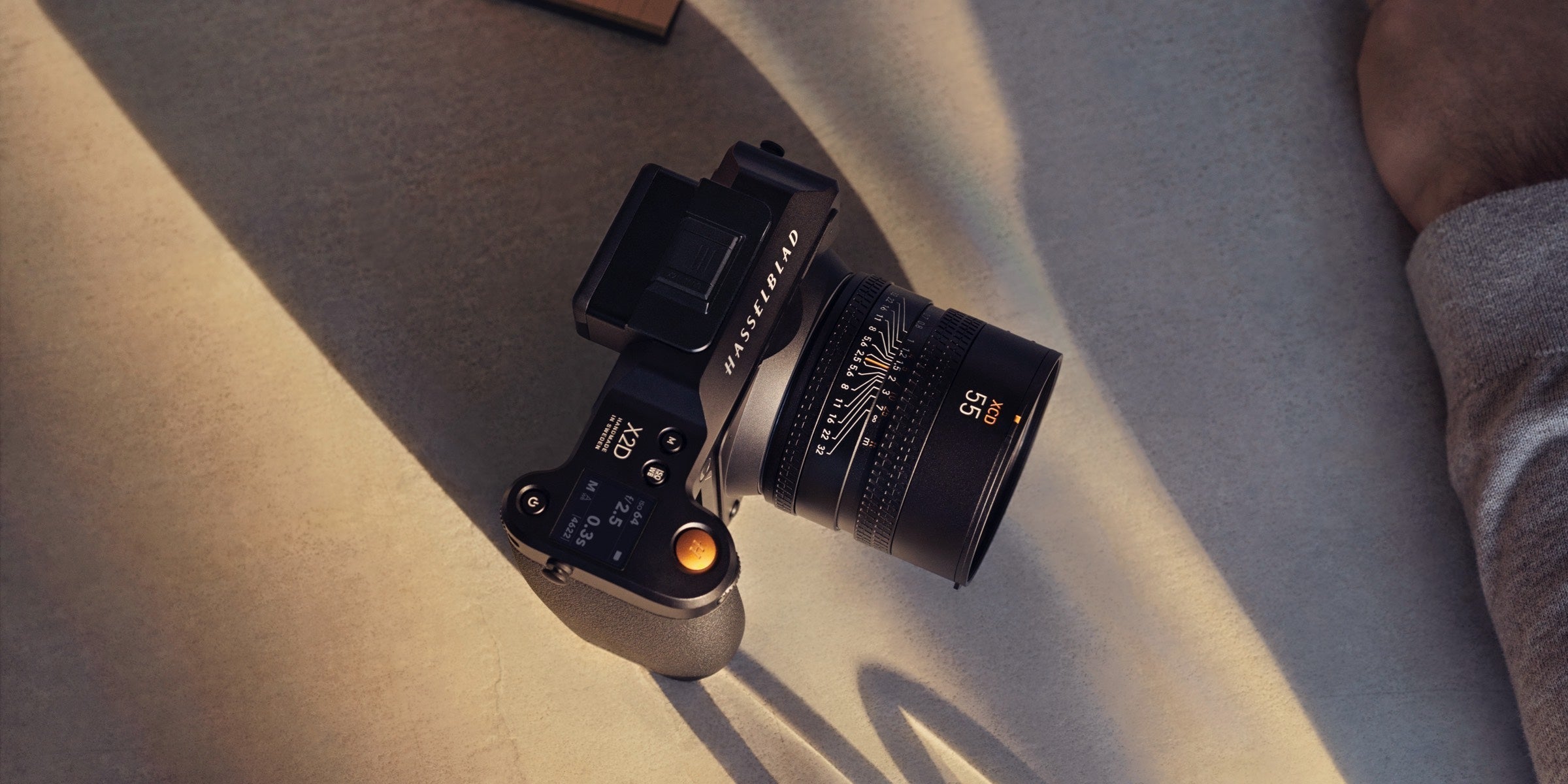
The Hasselblad X System uses a 43.8 × 32.9 mm sensor. Its light-sensitive area is approximately 70% larger than 36 × 24 mm full frame. The difference creates more physical space in which resolution, color information, and tonal transitions can be recorded. Hasselblad X2D II 100C combines this sensor size with a 100MP back-side illuminated CMOS sensor, 16-bit color, native ISO 50, and up to 15.3 stops of dynamic range. These specifications describe connected parts of the imaging system rather than isolated guarantees of image quality. Practical significance lies in how detail, color, and tone can remain connected across the frame. This may be valuable in landscape, portrait, architecture, commercial, and fine-art photography, particularly when the image will be printed large or adjusted extensively.
[cta: https://store-na.hasselblad.com/products/x2d-ii-100c]
How Does Camera Sensor Size Affect Your Photos?
Camera sensor size can affect image quality, low-light performance, field of view, depth of field, and the physical dimensions of the camera system.
These effects are connected. Changing the sensor format may lead the photographer to select a different focal length, shooting distance, or aperture to preserve the same composition. A fair comparison must account for those changes.
Image Quality, Low Light, and Dynamic Range
A larger sensor can provide greater image-quality potential under comparable conditions, but size alone does not establish the final result.
When the angle of view, shutter speed, depth of field, and output size are matched, a larger imaging area can collect more total light across the complete frame. This may support cleaner tonal information and greater editing flexibility.
The visible result still depends on sensor generation, pixel count, readout performance, exposure, processing, and final output size. A well-exposed image from a smaller format may appear cleaner than a poorly exposed image from a larger one.
Dynamic range should be considered with the same care. A larger sensor may provide more room for highlight and shadow information, but the actual range is determined by the specific sensor and its supporting electronics.
Megapixels and Pixel Size
Megapixels describe the number of pixels in the image, while sensor size describes the physical area across which those pixels are arranged.
When two sensors have similar resolutions and comparable technology, the larger sensor generally provides more surface area per pixel. That may influence light collection and noise behavior.
The relationship changes when the resolutions differ. A high-resolution large sensor may use pixels similar in size to those on a lower-resolution small sensor.
Modern sensor architecture also matters. Back-side illumination, microlens design, readout electronics, and processing can affect performance. For this reason, pixel size should not be evaluated without considering the complete sensor.
More megapixels may provide greater detail and cropping flexibility when the lens, focus, and shooting technique can support that resolution. They do not automatically create better color, broader dynamic range, or a more compelling photograph.

@ Albrecht Voss
Field of View and Crop Factor
Sensor size changes the portion of the lens’s projected image that is recorded.
A smaller sensor captures a narrower central area, while a larger sensor records more of the image circle. This difference changes the angle of view.
A 50 mm lens on an APS-C camera still has a physical focal length of 50 mm. Its angle of view may resemble that of a longer lens on full frame because the smaller sensor records a narrower area.
Crop factor is useful for comparing composition across formats. It does not mean the lens has become longer, and it should not be described as additional optical zoom.
The distinction matters when selecting lenses for wide scenes, portraits, architecture, or distant subjects.
Depth of Field and Background Blur
A larger sensor can make shallow depth of field easier to achieve when composition and aperture are held comparable.
To create the same framing on a larger format, a photographer may use a longer focal length or move closer to the subject. Those changes affect depth of field and can produce stronger separation between the subject and background.
This quality may support portraiture, fashion, and selective-focus studies. It is not an improvement in every context.
Landscape, architecture, macro, documentary, and wildlife photographers may need more of the scene to remain sharp. A smaller format can provide greater depth of field without requiring an extremely small aperture.
Background blur is therefore a creative choice rather than a universal measure of image quality.
Camera Size, Lens Size, and Portability
Sensor size can influence the dimensions of both the camera and its lenses.
A larger sensor requires a lens capable of projecting a correspondingly larger image circle. Depending on focal length and maximum aperture, this may require larger optical elements and a larger lens barrel.
The relationship is not fixed. A compact large-sensor camera with a small prime lens may be easier to carry than a smaller-sensor camera paired with a long zoom.
A useful comparison considers the entire working system: camera, lenses, batteries, support equipment, and the way the photographer moves through a location.
Portability is not separate from image quality. A system that can be carried comfortably may create more opportunities to observe, wait, and respond to light.
Does a Bigger Sensor Always Mean Better Image Quality?
No. A bigger sensor may offer greater imaging potential, but it does not guarantee a stronger image.
Focus accuracy, camera movement, lens performance, exposure, light, and processing can have a greater effect on the final photograph than sensor size alone.
The viewing conditions also matter. Differences that are visible in a large print or during extensive editing may be difficult to see after an image has been reduced for a small screen.
Sensor size becomes meaningful when its characteristics serve the intended photograph. A larger format may be valuable for fine detail, tonal transitions, color-critical work, or large output. A smaller format may be more effective when portability, reach, speed, or greater depth of field matters more.
Which Camera Sensor Size Is Right for You?
The right camera sensor size is the one that supports the images you make and the way you prefer to work.
Rather than choosing by size alone, consider your subjects, lighting conditions, output requirements, lens needs, and the amount of equipment you are prepared to carry.

@Zhenglin Li
Travel and Everyday Photography
Travel and everyday photography often benefit from a camera that is comfortable to carry for long periods.
A small inch-type, 1-inch-type, Micro Four Thirds, or APS-C system may provide sufficient detail while keeping the complete kit manageable. The deeper depth of field of smaller formats may also help when scenes unfold quickly.
Larger formats remain possible for travel when tonal flexibility, resolution, or a particular visual rendering is central to the work. The tradeoff is usually evaluated across the complete camera-and-lens combination rather than the body alone.
Wildlife, Sports, and Distant Subjects
Wildlife and sports photography require a balance of reach, autofocus, shooting speed, lens size, and low-light performance.
Smaller formats can place a distant subject across more of the frame with a given focal length. They may also support lighter telephoto systems.
Larger sensors may provide greater flexibility in difficult light or when substantial cropping is required, provided that the camera offers enough resolution and responsive subject tracking.
Sensor size is only one part of this decision. Lens availability, autofocus behavior, buffer performance, stabilization, and handling may have a more immediate effect on the shooting experience.
Portrait, Commercial, Landscape, and Fine-Art Photography
Portrait, commercial, landscape, and fine-art photography may place greater emphasis on color, tonal transitions, fine surface detail, and large output.
Full frame can offer a flexible balance of speed, resolution, lens choice, and depth-of-field control.
Medium format may become relevant when the photograph must preserve subtle information across the frame or support demanding printing and editing. Its value is not simply that the sensor is larger. It lies in how the sensor, color response, resolution, optics, and workflow contribute to a coherent image.
The appropriate format remains tied to intent. Greater technical capacity is useful only when it supports the light, subject, and final form of the photograph.
Frequently Asked Questions
Can Cameras With the Same Sensor Size Produce Different Image Quality?
Yes. Cameras with the same sensor size may differ in resolution, dynamic range, color response, noise performance, stabilization, autofocus, processing, and lens quality. Sensor dimensions describe one part of the imaging system rather than its complete performance.
Does Sensor Size Matter for Photos Viewed Online?
Sensor-size differences may be less visible after an image is reduced for a website or social platform. At smaller display sizes, lighting, composition, focus, color, and processing may have a more noticeable effect on the viewing experience.
Can You Use a Lens Made for a Larger Sensor on a Smaller-Sensor Camera?
It may be possible when the lens mount and electronic connections are compatible. The smaller sensor records a narrower central portion of the image circle. Autofocus, exposure control, and other functions depend on the specific camera and lens combination.
Final Thoughts
Camera sensor size defines part of the space in which an image is recorded. It influences field of view, depth of field, tonal potential, lens design, and the physical character of a camera system.
Smaller formats may offer portability, reach, and generous depth of field. Larger formats may provide more imaging area for detail, color, and tonal transitions.
Neither direction is complete on its own. The most appropriate format is the one that supports the photographer’s intention without placing unnecessary distance between observation and the finished image.