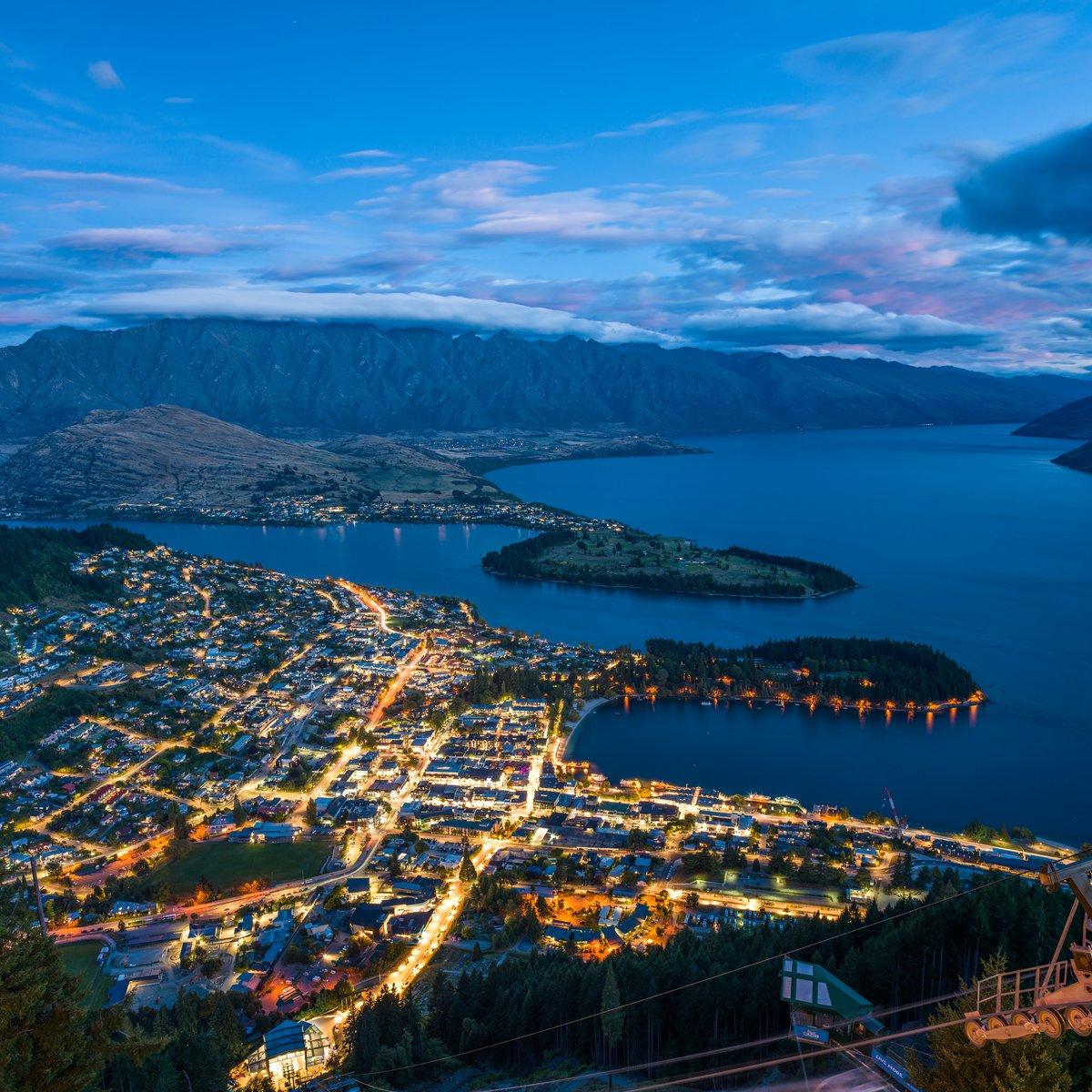
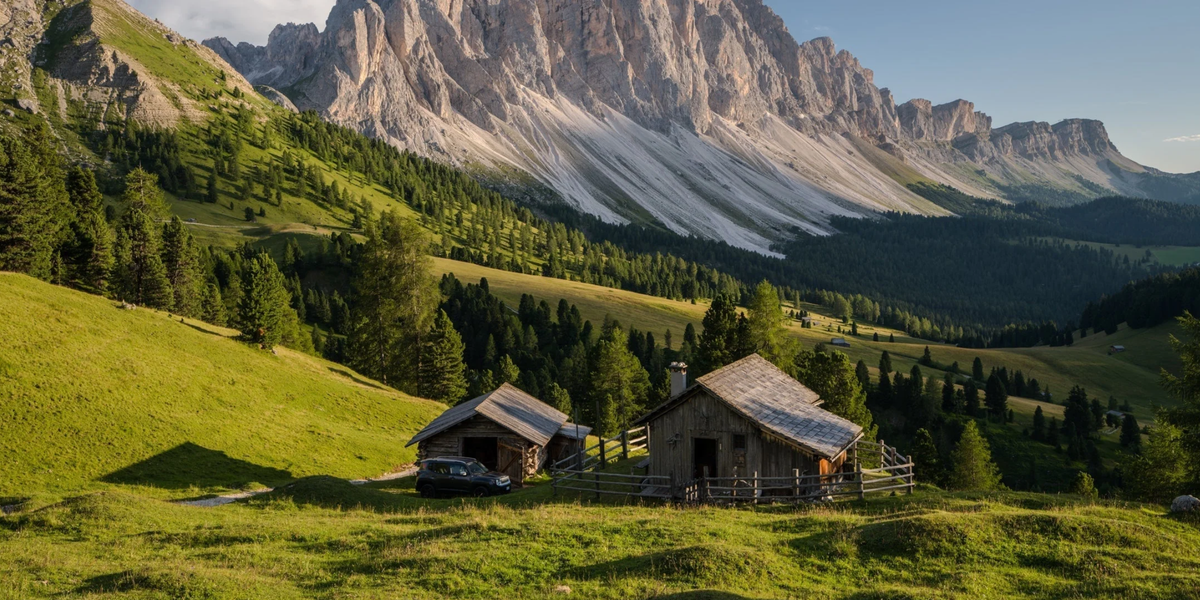
Medium format landscape photography uses a sensor or film frame larger than full frame to preserve more detail, tonal information, and color within a scene.
Its value becomes especially clear in landscapes shaped by subtle light: the fading color of a twilight sky, layers of mist across distant hills, or the texture of a ridgeline reproduced in a large print. The larger imaging area provides a generous foundation for high resolution and smooth tonal transitions, while encouraging close attention to exposure, focus, and composition.
Today, medium format can take several forms. A modern mirrorless system offers mobility and immediate digital feedback. A modular camera or digital back supports a more measured approach, including the use of technical-camera movements. Film offers larger negatives, distinctive materials, and a physical workflow.
Each approach gives the landscape more room to retain its natural complexity.
Why Medium Format Matters for Landscape Photography
Landscapes often contain more visual information than can be appreciated at first glance. Bright clouds may sit above a shaded foreground. Fine vegetation may extend across a distant slope. Mist, rock, water, and sky may differ through only slight changes in color and tone.
Medium format helps preserve these relationships from capture through post-production and print.
Detail for Large Prints
Resolution becomes most meaningful when an image is printed, cropped, or carefully refined.
A high-resolution medium format file can retain the fine structure of trees, stone, snow, and distant terrain without allowing detail to overwhelm the wider composition. This is particularly valuable for exhibition prints, commercial output, and images that need to accommodate several crops.
The 100-megapixel, 43.8 × 32.9mm sensor used in current Hasselblad medium format cameras provides substantial room for this work. A distant ridgeline can remain clearly defined while the atmosphere and spatial balance of the scene remain intact.
The benefit is more than enlargement. It is the ability to carry the character of the landscape into its final presentation.
Tonal Range and Natural Color
Landscape light rarely arrives evenly.
At sunrise, a bright horizon may appear above terrain that remains in shadow. Illuminated snow may sit beside dark rock, while reflected light moves across water, cloud, and wet stone.
A broad dynamic range gives the photographer more latitude to retain information throughout these areas. The X2D II 100C records up to 15.3 stops of dynamic range at ISO 50, supporting careful interpretation of both highlights and shadows.
Color is equally important. A grey sky may contain traces of blue, violet, and warm reflected light. Vegetation changes with distance, moisture, and atmosphere. Rock may move through several closely related hues before entering shadow.
Sixteen-bit color and Hasselblad Natural Colour Solution help preserve these distinctions with clarity and restraint. The aim is not stronger saturation, but a more natural relationship between neighboring colors.

@Weimin Chu
Is Medium Format Worth It for Landscapes?
Medium format is particularly valuable when the final photograph depends on fine detail, controlled color, extensive post-production, or substantial print size.
Its advantages are easiest to see when the image is viewed beyond a small screen. In a large print, fine vegetation remains separated rather than merging into a single texture. A gradual sky retains its continuity after tonal adjustments. Shadowed surfaces reveal shape and material without appearing overprocessed.
The additional image information also supports practical production needs. A single file can accommodate multiple crops, detailed retouching, and different output formats while maintaining a consistent visual character.
|
Consideration |
Medium Format |
Full Frame |
APS-C |
|
Detail for large output |
Extensive latitude |
Strong latitude |
Well suited to moderate output |
|
Tonal gradation |
Highly nuanced |
Varies by camera |
Varies by camera |
|
Cropping flexibility |
Extensive with high-resolution files |
Strong with high-resolution bodies |
More dependent on resolution |
|
System size |
Depends on body and lens |
Broad range |
Often compact |
|
Field workflow |
Detail-focused |
Highly versatile |
Mobile and efficient |
These are broad system characteristics. The camera, lens, technique, and intended output remain central to the result.
Medium format is likely to offer its greatest value to photographers who:
-
produce exhibition or gallery prints;
-
require detailed commercial or editorial files;
-
work extensively with color and tonal adjustments;
-
photograph landscapes with fine texture or demanding contrast;
-
value a focused approach to exposure and composition.
With the right body and lens, it can also be used for travel, documentary, and handheld landscape work. The format establishes the imaging foundation; the complete system determines how it performs in the field.
Choosing a Medium Format System for Landscapes
The choice between film and digital shapes both the shooting experience and the final image.
Digital medium format provides immediate review, high resolution, stabilization, and a direct post-production workflow. Modular systems support a different pace and can introduce technical-camera movements. Film offers a physical negative or transparency and a visual character shaped by the selected film stock, development, and printing process.
Digital Medium Format
Digital medium format suits photographers who need detailed capture and precise control from exposure through final output.
The Hasselblad X System brings these qualities into an integrated mirrorless camera. Its 43.8 × 32.9mm sensor records the landscape across an area approximately 67% larger than full frame, providing a strong foundation for resolution, tonal gradation, and color.
The X2D II 100C combines a 100-megapixel sensor with up to 15.3 stops of dynamic range. Its five-axis in-body stabilization, rated at up to 10 stops at the image center, expands the possibilities for handheld work at dawn, dusk, and in changing weather.
Continuous autofocus and subject detection are useful when movement enters the scene, whether it is a person crossing the frame, an animal within the landscape, or environmental details shifting in the wind. An integrated 1TB SSD supports extended sessions without interrupting the creative process.
[cta: https://store-na.hasselblad.com/products/x2d-ii-100c]
Modular Medium Format
A modular system creates a different relationship between camera, lens, and landscape.
The 907X & CFV 100C combines a compact camera body with a detachable 100-megapixel digital back. Used with the 907X, it offers a waist-level perspective and a highly focused shooting experience. The CFV 100C can also connect to compatible V System cameras and technical cameras.
Technical-camera movements add precise control:
-
Tilt changes the orientation of the focus plane, helping align it with terrain that extends from the foreground into the distance.
-
Shift changes the composition without tilting the camera, supporting careful framing and the control of converging verticals.
This approach connects contemporary digital capture with the modular principles that have long shaped Hasselblad photography.
[cta: https://store-na.hasselblad.com/products/907x-cfv-100c]
Medium Format Film
Film remains an important part of the medium format landscape tradition.
A larger negative or transparency preserves fine information while introducing the distinctive response of the selected film stock. Exposure becomes finite and physical, and the image continues to take shape through development, scanning, enlargement, or printing.
Modular cameras allow photographers to change film backs or viewfinders according to the project. More compact twin-lens reflex and rangefinder designs offer a lighter approach for walking and travel.
Film creates a clear sequence of observation, exposure, and interpretation, with each frame carrying a deliberate sense of completion.
Medium Format Sizes and Composition
Medium format includes several digital sensor and film-frame dimensions. Their proportions influence the balance and rhythm of the landscape.
|
Format |
Type |
Visual Character |
Landscape Application |
|
43.8 × 32.9mm |
Digital |
Balanced 4:3 frame |
General digital landscape work |
|
6 × 4.5cm |
Film |
Compact rectangle |
Travel and varied subjects |
|
6 × 6cm |
Film |
Square and centered |
Reflections and formal compositions |
|
6 × 7cm |
Film |
Broad, balanced rectangle |
Open landscapes and print |
|
6 × 9cm |
Film |
Extended horizontal frame |
Expansive scenes |
|
6 × 17cm |
Film |
Panoramic |
Coastlines, valleys, and mountain ranges |
The Hasselblad X System uses a 43.8 × 32.9mm sensor with proportions close to 4:3. Compared with the wider 3:2 ratio common in full-frame cameras, the 4:3 frame can create a more concentrated relationship between foreground, subject, and sky. It is well suited to vertical landscapes and scenes built from several spatial layers.
Film provides a wider range of native proportions. The 6 × 6 square supports symmetry, reflections, and compositions organized around a strong visual anchor. The 6 × 7 frame offers a broad yet restrained rectangle suited to open terrain. The panoramic 6 × 17 format invites the eye to move across coastlines, valleys, and repeated forms.
In each case, the frame becomes part of the act of seeing rather than a crop applied afterward.
Choosing Lenses for Medium Format Landscapes

Wide-angle lenses can express scale and connect a near foreground with the wider environment. Standard focal lengths offer a quieter perspective that suits woodland and intimate landscapes. Longer lenses can isolate distant layers and reveal patterns that may be lost within a broad view.
A focused landscape kit may therefore contain only a few lenses, selected according to the photographer’s visual approach.
Focal Length and Spatial Interpretation
A wide lens works particularly well when the foreground carries texture, direction, or visual weight. It can establish a strong relationship between nearby forms and distant terrain.
A standard lens often feels closer to direct observation. It is useful for scenes where subtle organization matters more than dramatic scale.
A longer focal length can bring distant ridges, trees, and atmospheric layers into clearer relationship. Rather than recording the entire landscape, it allows the photographer to identify a structure within it.
Lens choice begins with the spatial relationship the image requires.
Optical Performance, Filters, and Movements
A landscape lens needs to perform across the frame. Edge detail matters when terrain extends into the corners, while controlled chromatic aberration helps maintain clean transitions along branches, rock, and bright horizons.
Filter compatibility may also influence the workflow. Neutral-density filters support long exposures, while graduated filters can help balance a bright sky and darker ground at capture.
Native XCD lenses are designed around the imaging area and resolving requirements of the X System, providing a consistent optical and digital workflow.
When a technical camera is used, tilt can extend the intended focus plane through the landscape, while shift supports precise composition and perspective control. These movements are most effective when they serve the spatial structure of the photograph rather than being applied as an effect.
How to Photograph Sharp Medium Format Landscapes
High resolution makes careful technique visible and rewards it in equal measure.
The most effective approach depends on the distance between foreground and background, the selected lens, and the intended output.
Focus and Aperture
When a composition includes a close foreground and distant terrain, several methods are available:
-
position focus according to the required near and far limits;
-
use focus stacking when one focus position does not provide sufficient coverage;
-
apply tilt on a technical camera to align the focus plane more closely with the terrain;
-
allow selected areas to remain soft when separation supports the composition.
Maximum sharpness across the entire frame is not always necessary. Focus should support the hierarchy of the image.
Smaller apertures increase depth of field but can gradually reduce fine resolution through diffraction. The most suitable aperture depends on the lens, focal length, subject distance, and intended print size.
When the required depth exceeds the lens’s strongest aperture range, focus stacking or camera movements may preserve more detail than stopping down further.
Long Exposures
Long exposures can reveal forms of movement that are difficult to perceive directly.
Water may become a continuous surface. Clouds can create direction through the sky. Wind may soften foliage against stationary rock.
The shutter speed should support the character of the landscape. A long exposure is most effective when it clarifies the relationship between stillness and movement.
When working with film, reciprocity characteristics vary by film stock and should be included in exposure planning.
Field Workflow for Medium Format Landscapes
A well-prepared workflow allows the photographer to remain attentive to the landscape.
A stable support is useful for long exposures, focus stacking, and technical-camera movements. Handheld photography is equally viable when stabilization, shutter speed, and lens choice suit the conditions.
Weather protection should reflect the environment, particularly near salt water, blowing sand, snow, or prolonged moisture. Equipment preparation should remain simple and purposeful.
High-resolution files also benefit from a clear storage plan. Before an extended trip, consider:
-
available internal and removable storage;
-
a reliable backup method;
-
processing performance for large RAW files;
-
additional capacity for focus stacks and stitched panoramas;
-
a consistent archive structure.
This workflow protects the flexibility that high-resolution capture provides for cropping, detailed refinement, large prints, and future reinterpretation.
Common Questions
Should I Choose Medium Format or Large Format for Landscapes?
Large format offers a larger film area and extensive camera movements, while medium format provides a more portable and responsive field workflow. The appropriate choice depends on whether movement control, negative size, mobility, or shooting speed matters most to the project.
Can I Adapt Other Lenses to a Medium Format Camera?
Some legacy lenses can be mounted with a compatible adapter. Coverage, corner quality, focusing, electronic control, and shutter operation vary by lens and adapter. Native medium format lenses generally provide the most consistent performance across the full imaging area.
How Large Can I Print a Medium Format Landscape Photograph?
Print size depends on resolution, capture quality, lens performance, processing, viewing distance, and the image itself. A carefully made 100-megapixel file can support substantial gallery-scale output while retaining fine detail at an appropriate viewing distance.