A 100-megapixel camera records approximately 100 million individual pixels in each photograph. That number suggests extraordinary detail, but it does not explain the whole image.
Resolution is only one part of image quality. Sensor size, dynamic range, colour depth, lens performance, focus accuracy, camera stability, lighting and post-production all influence what those pixels ultimately reveal.
For some photographers, 100 megapixels provide meaningful freedom to crop, print at a large scale and preserve fine details. For others, the larger files and more demanding workflow may offer little practical advantage.
Understanding what 100MP changes and what it does not can help you decide whether that resolution matches the way you photograph.
What Does 100 Megapixels Mean?
One megapixel represents approximately one million pixels. A 100-megapixel image therefore contains around 100 million photosites arranged across its width and height.
The exact dimensions vary between cameras. A 100MP Hasselblad image, for example, may measure 11,656 × 8,742 pixels. Multiplying these dimensions produces just under 102 million pixels.
The benefit is not simply a larger number on a specification sheet. More pixels can record smaller visual structures, including:
-
Fine textures in stone, foliage, textiles and skin
-
Small product details and surface finishes
-
Architectural elements across a wide scene
-
Distant subjects within a landscape
-
Subtle features preserved after cropping
However, individual pixels do not work independently. Their usefulness depends on the optical and imaging system surrounding them.
Native 100MP and Multi-Shot Resolution
A native 100MP sensor records the complete high-resolution image in one exposure. This makes it suitable for a broad range of subjects, including portraits, landscapes, street scenes and changing natural light.
Multi-shot systems create a higher-resolution image by combining several exposures captured with small sensor movements. This approach can provide exceptional colour and detail for static subjects in controlled conditions.
The two methods serve different workflows. Native resolution prioritises flexibility, while multi-shot capture is designed for subjects that remain still during the complete exposure sequence.
Do More Megapixels Mean Better Image Quality?
More megapixels increase the amount of spatial information a camera can record. They do not automatically guarantee a more convincing photograph.
If the lens cannot resolve sufficient detail, the focus falls in the wrong place or the camera moves during exposure, the additional pixels may only describe those imperfections more precisely.
The most useful way to evaluate a 100MP camera is to consider the complete path from light entering the lens to the finished image.
Sensor Size, Dynamic Range and Colour Depth

@Zhenglin Li
Sensor size affects how the image is rendered beyond its pixel count. A larger imaging area can support fine tonal transitions, controlled depth of field and a distinct relationship between focal length and perspective.
Dynamic range determines how much information can be retained between bright highlights and deep shadows. Colour depth determines how finely colours and tonal values can be represented.
These qualities matter because high resolution makes subtle transitions easier to inspect. A large file with limited tonal information may show abrupt gradients or require more careful editing. A file that combines resolution with rich colour and broad dynamic range offers greater flexibility.
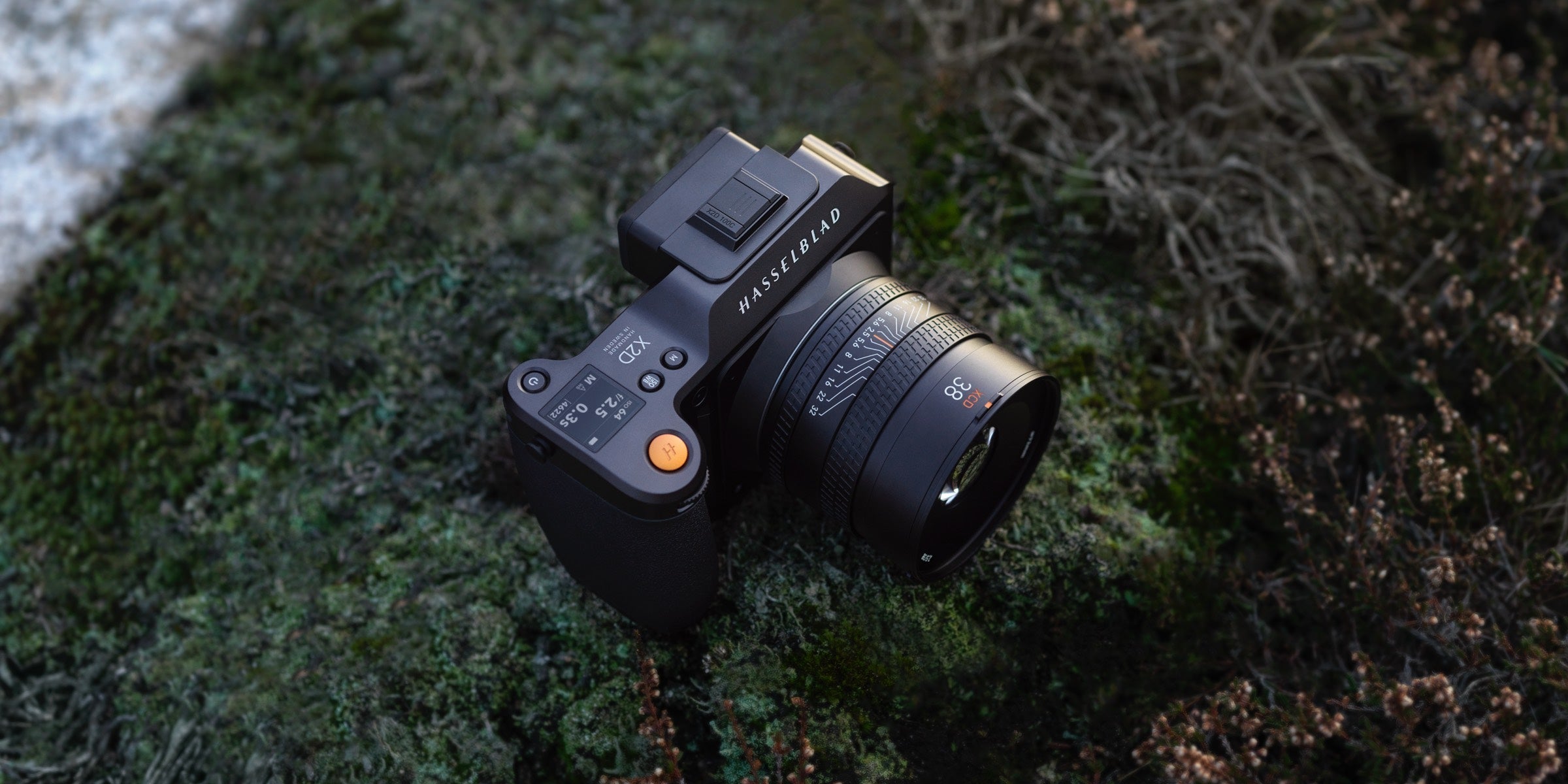
The Hasselblad X2D II 100C combines a 43.8 × 32.9mm 100MP BSI CMOS sensor with 16-bit colour depth, native ISO 50 and up to 15.3 stops of dynamic range. Its 16-bit capture can represent approximately 281 trillion colours, supporting smooth transitions across skin tones, skies and other gradual changes in light.
For the photographer, the benefit is not simply “more colour.” It is the ability to work with small differences in hue and brightness without allowing resolution to overpower tonal subtlety.
Hasselblad Natural Colour Solution with High Dynamic Range, or HNCS HDR, integrates colour and dynamic-range handling into the imaging system. The result is a 100MP file designed to preserve both fine structures and the colour relationships that give those structures visual meaning.
[cta: https://store-na.hasselblad.com/products/x2d-ii-100c]
Lens Resolution, Focus Accuracy and Camera Stability
The sensor can only record the information delivered by the lens.
A lens designed for lower-resolution capture may still produce attractive photographs, but it may not transfer enough fine detail to use the full potential of a 100MP sensor. Contrast, chromatic aberration, field curvature and sharpness toward the edges can become easier to see at high resolution.
The XCD 2,8-4/35-100E uses an optical construction of 16 elements in 13 groups, including three aspherical elements and five ED elements. These elements help manage optical aberrations and deliver the resolution required by a 100MP sensor from the centre toward the edges of the frame.
Its 36–97mm focal-length range provides an equivalent full-frame view of approximately 28–76mm. This covers wide-angle, standard and medium-telephoto perspectives in one lens, allowing photographers to move between landscapes, environmental portraits and more tightly framed subjects without changing lenses.
The central benefit is not the zoom range alone. It is the combination of compositional flexibility and optical performance capable of supporting high-resolution capture.
[cta: https://store-na.hasselblad.com/products/xcd-2-8-4-35-100e]
Focus and stability are equally important. A slight focus error or small amount of camera movement may have gone unnoticed at a lower output size, but it can become apparent when a 100MP image is viewed closely or printed large.
This does not mean every 100MP photograph requires a tripod. It means the camera, lens and shooting technique must work together to retain the detail the sensor can record.
What Are 100-Megapixel Cameras Used For?
A 100MP camera is most valuable when detail contributes directly to the finished work.
Landscape Photography
Landscape photographers often need to preserve information across a wide field of view, from small foreground textures to distant terrain.
A 100MP image provides greater freedom to explore those details in a large print. It can also allow the photographer to refine the final composition after capture without immediately reducing the image to a low resolution.
High resolution is particularly useful for:
-
Layered mountain and woodland scenes
-
Panoramic compositions
-
Images containing distant architectural or natural features
-
Large exhibition prints
-
Detailed environmental studies
Resolution alone will not create depth or atmosphere. Light, timing and composition remain the defining elements. The higher pixel count simply preserves more of what the photographer places within the frame.

@Albrecht Voss
Architecture and Interior Photography
Architectural photographs frequently contain fine lines, repeating patterns and small material details.
Stone, timber, glass, metal and textiles each respond differently to light. A high-resolution file can preserve these surfaces while also allowing the photographer to correct perspective or refine the framing during post-production.
Interior photographers may also need to create several outputs from one composition. A single horizontal image might be adapted for a full-page spread, a vertical crop and a close detail, provided that the original capture contains enough usable information.
Commercial and Product Photography
Commercial work often requires accurate rendering of materials, shapes and colour.
A product photograph may need to show stitching, machining, engraving, reflections or the finish of a surface. These details can influence how a viewer understands the quality and construction of the object.
The same photograph may also be used across:
-
Large-format advertising
-
Packaging
-
Editorial layouts
-
E-commerce pages
-
Close-up crops
-
Printed catalogues
A 100MP file gives creative teams more freedom to generate those variations from a carefully produced master image.
Fashion and Portrait Photography
Portrait photographers do not always need to display every visible skin detail. High resolution is valuable because it gives them control over how much information to preserve, soften or emphasise.
Fine hair, fabric, jewellery and makeup can be rendered with precision. At the same time, smooth tonal transitions and accurate colour remain essential for natural-looking skin.
The practical benefit is flexibility. A full-length portrait can retain enough detail for a closer editorial crop, while a carefully lit studio portrait can support a large print without losing texture.
Artwork and Cultural-Heritage Documentation
Photographs of paintings, manuscripts, textiles and crafted objects often need to preserve small colour and surface variations.
High-resolution capture can assist with documentation, archival records and detailed visual study. Colour management, even illumination, lens performance and precise camera alignment are particularly important in this work.
Here, resolution is part of a controlled reproduction process rather than an isolated specification.
How Much Can You Crop a 100MP Image?
Cropping removes pixels from the edges of an image. Beginning with more pixels gives the photographer greater freedom to crop while retaining a useful final resolution.
The following examples use an original image measuring 11,656 × 8,742 pixels.
|
Approximate Remaining Resolution |
Example Pixel Dimensions |
Practical Use |
|
100MP |
11,656 × 8,742 |
Full-resolution output and very large prints |
|
50MP |
About 8,240 × 6,180 |
Strong crop with substantial print and editorial flexibility |
|
25MP |
5,828 × 4,371 |
Approximately half the width and height of the original |
|
12MP |
About 4,120 × 2,910 |
Web, editorial and many moderate-size print uses |
A 25MP crop from a 100MP image is not a minor trim. It represents approximately one-quarter of the original image area.
This can be useful when:
-
A distant subject occupies a small part of the frame
-
The final layout requires a different aspect ratio
-
One photograph must support several compositions
-
The photographer wants to refine spacing around a subject
-
A landscape image needs a tighter visual emphasis
Cropping should still support the original photographic intention. A high pixel count provides options, but it does not replace careful framing or an appropriate focal length.
How Large Can You Print a 100MP Image?
Print size depends on pixel dimensions, print resolution, viewing distance, paper, sharpening and the quality of the original capture.
The table below uses an image measuring 11,656 × 8,742 pixels and shows approximate dimensions before additional resizing.
|
Print Resolution |
Approximate Print Size |
Suitable Context |
|
300 ppi |
38.9 × 29.1 inches |
Close-viewed fine-art and portfolio prints |
|
240 ppi |
48.6 × 36.4 inches |
Large, high-quality photographic prints |
|
150 ppi |
77.7 × 58.3 inches |
Very large display prints viewed from farther away |
These figures are guides rather than fixed limits.
A large image intended to be viewed from several metres away does not require the same pixel density as a print examined at reading distance. Conversely, a highly detailed fine-art print may benefit from greater pixel density and careful output sharpening.
The visible print quality also depends on whether the original image contains:
-
Accurate focus
-
Sufficient lens resolution
-
Controlled camera movement
-
Appropriate depth of field
-
Clean tonal information
-
Effective sharpening for the selected print process
A poorly focused 100MP file does not become a detailed print simply because it contains more pixels.
100 Megapixels vs. 50 Megapixels
A 100MP image contains twice as many total pixels as a 50MP image. It does not contain twice the resolution across its width and height.
Because pixels are distributed across two dimensions, doubling the total pixel count produces roughly 41% more pixels along each linear dimension, assuming the same aspect ratio.
That difference remains significant, particularly for cropping and large output, but it should be understood realistically.
|
Consideration |
50MP |
100MP |
|
Fine-detail capture |
High |
Very high |
|
Cropping flexibility |
Strong |
Greater |
|
Large-print potential |
Excellent |
More extensive |
|
File size |
More manageable |
Substantially larger |
|
Processing demand |
Moderate to high |
High |
|
Sensitivity to focus and movement |
Noticeable |
More visible |
|
Storage requirements |
Significant |
Greater |
|
Best suited to |
General professional high-resolution work |
Detail-critical and large-output workflows |
A photographer producing moderate-size prints may find 50MP more than sufficient. A photographer creating large exhibition work or multiple crops from one image may benefit more directly from 100MP.
The right choice depends on the final output, not on the number alone.
How Do 100MP Files Affect Your Workflow?
The experience of using a 100MP camera continues after the shutter is released.
Large files affect storage, transfer, preview generation, editing, backup and delivery. A workflow designed around smaller images may need to be adjusted.
Storage and Backup Requirements
File size varies according to the camera, format, bit depth and image content.
As a practical example, Hasselblad states that files from the 907X & CFV 100C are approximately 200MB in RAW format, 40MB in JPEG and 20MB in HEIF, although the exact size varies with the photograph.
At approximately 200MB per RAW image:
-
100 photographs require about 20GB
-
500 photographs require about 100GB
-
1,000 photographs require about 200GB
A commercial shoot, travel project or multi-day landscape session can therefore generate substantial data.
A reliable workflow should account for:
-
Primary working storage
-
A second local copy
-
Off-site or cloud backup
-
Space for previews, exports and edited versions
-
Long-term archive capacity
Storage should be considered before the shoot, not after the first drive is full.
In-Camera Storage and Transfer Speed
Large files must first be written by the camera before they can be transferred and backed up.
The X2D II 100C includes a 1TB internal SSD with write speeds of up to 2,370MB/s and read speeds of up to 2,850MB/s. It also supports CFexpress Type B cards for additional storage.
The user benefit is continuity. High-capacity internal storage reduces the need to interrupt a shoot because a card is full, while fast writing helps the camera manage high-resolution data without allowing storage to dominate the creative process.
The internal SSD should be treated as active capture storage. Files should still be transferred into a structured backup system after the shoot.
Computer Performance
Editing 100MP files places greater demands on a computer than editing smaller images.
Important factors include:
-
Available RAM
-
CPU and GPU performance
-
SSD speed
-
Application optimisation
-
Monitor resolution
-
Available working-drive capacity
Operations involving multiple layers, local masks, panoramas or focus stacks can increase the demand further.
You do not necessarily need the most powerful computer available. However, photographers who process high volumes of 100MP images should consider the complete editing experience, not just whether the software can open the file.
Selecting the Right Output Resolution
Not every photograph needs to remain at 100MP through every stage of delivery.
A practical workflow can preserve the full-resolution master file while creating smaller versions for:
-
Online galleries
-
Social platforms
-
Client review
-
Editorial placement
-
E-commerce
-
Email delivery
Keeping the master separate allows the image to support future prints or alternative crops without forcing every working file to remain at maximum size.

@Benjamin Everett
How Does Shooting Technique Change at 100 Megapixels?
The fundamentals of photography do not change at 100MP. Their effects become easier to inspect.
A small focusing error, insufficient shutter speed or limited depth of field may be more apparent when the image is viewed at full resolution.
Shutter Speed, Stabilisation and Tripod Use
Camera movement reduces the clarity of fine details. A tripod remains valuable for long exposures, precise architectural compositions, focus stacking and carefully controlled landscape work.
However, a 100MP camera does not need to remain permanently attached to one.
The X2D II 100C uses five-axis in-body image stabilisation rated at up to 10 stops. Its AF-S system combines 425 phase-detection autofocus zones with LiDAR, while AF-C provides continuous detection and tracking for moving subjects.
These systems address two common reasons high-resolution detail is lost:
-
The camera moves during exposure.
-
The focus does not remain on the intended subject.
The benefit is a wider range of usable shooting situations. Landscapes, environmental portraits and street scenes can be photographed with greater freedom while retaining the option to work from a tripod when the composition requires it.
Depth of Field and Aperture
More resolution does not create more depth of field. It can make the transition between sharp and unsharp areas easier to see.
When photographing a subject with significant depth, stopping down the aperture may bring more of the scene into focus. However, very small apertures can introduce diffraction, gradually reducing fine-detail contrast.
The most suitable aperture depends on:
-
The lens
-
Subject distance
-
Desired depth of field
-
Final print size
-
Viewing distance
-
Whether focus stacking is practical
For static subjects, focus stacking can combine several images focused at different distances. This may preserve greater detail across the scene without relying on the smallest aperture.
For portraits, a limited depth of field may be intentional. The goal is not to make every pixel equally sharp, but to place the sharpest detail where it supports the image.
Focus Placement
At 100MP, focusing should be deliberate.
For a portrait, the nearest eye may need to be precisely sharp. For architecture, the focus plane may need to support detail from foreground to background. For a landscape, the photographer may need to balance foreground sharpness with distant clarity.
Magnified live view, reliable autofocus and careful review can help confirm whether the focus supports the intended output.
Lighting and Exposure
High resolution records fine textures, but those textures still need light to become visible.
Directional light can reveal surface form. Soft light can preserve subtle tonal transitions. Controlled reflections can define glass, metal and polished materials.
Underexposure followed by aggressive shadow recovery may increase visible noise, while clipped highlights permanently remove information. A well-considered exposure gives the high-resolution file a stronger foundation for editing.
Do You Need a 100-Megapixel Camera?
A 100MP camera is most useful when its resolution solves a real production or creative requirement.
You may benefit from 100MP when:
-
You regularly make large prints
-
You crop deeply or create several compositions from one image
-
You photograph products, architecture or artwork with fine details
-
Your clients require high-resolution master files
-
You need extensive retouching and layout flexibility
-
You have lenses and technique capable of supporting the resolution
-
Your storage and editing workflow can manage large files
You may not need 100MP when:
-
Your images are primarily viewed on phones or websites
-
You rarely crop
-
You photograph high volumes that must be processed quickly
-
Smaller files improve your delivery workflow
-
Your subjects and output sizes do not reveal the difference
-
Speed, portability or low storage demand is more important than maximum detail
The question is not whether 100MP is objectively superior. It is whether your finished work can make use of the additional information.
Which Hasselblad 100MP Workflow Fits You?
Hasselblad offers different ways to work with 100MP capture.
The X2D II 100C is an integrated medium-format camera designed for photographers who value in-body stabilisation, modern autofocus, internal SSD storage and a familiar handheld workflow.
The 907X & CFV 100C takes a modular approach. Its CFV 100C digital back can be used with the 907X camera body and with nearly all compatible V System cameras and lenses introduced from 1957 onward, with the exception of the original SWC.
|
Your Workflow |
Suitable Hasselblad System |
Why It Fits |
|
Integrated handheld photography |
X2D II 100C |
Combines 100MP capture with stabilisation, modern autofocus and internal SSD storage |
|
Modular and V System photography |
907X & CFV 100C |
Connects contemporary 100MP digital capture with the 907X platform and compatible classic V System equipment |
The two systems are not simply different camera bodies with the same pixel count. They represent different relationships between the photographer, the camera and the act of making an image.
[cta: https://store-na.hasselblad.com/products/907x-cfv-100c]
Final Thoughts
A 100-megapixel camera offers more than the ability to produce a larger file.
Its value lies in the options contained within that file: the freedom to crop, print at scale, preserve small details and work carefully with colour and tonal transitions.
Those benefits are strongest when the complete system supports them. The sensor must retain useful tonal information. The lens must resolve fine structures. Focus and stability must preserve those structures. The workflow must be able to store, process and protect the resulting files.
When those elements align with a genuine creative or professional need, 100MP becomes more than a specification. It becomes working space for the photographer.
Frequently Asked Questions
Is 100MP Better Than 50MP?
A 100MP camera records twice as many total pixels as a 50MP camera, providing greater cropping and large-print flexibility. It is not automatically better for every photographer because file size, lens performance, focus, stability and final output also matter.
How Large Is a 100MP Photo?
The exact dimensions depend on the camera. A Hasselblad 100MP image can measure approximately 11,656 × 8,742 pixels, giving the photographer enough information for large prints and substantial crops.
Can You Handhold a 100MP Camera?
Yes. Suitable shutter speed, stable technique, accurate focus and effective image stabilisation can support handheld 100MP photography. A tripod remains useful for long exposures and highly controlled compositions.
Do I Need Special Lenses for 100MP?
You need lenses capable of delivering sufficient resolution and contrast to the sensor. A 100MP sensor can still be used with many compatible lenses, but the lens strongly influences how much fine detail appears in the final image.
How Much Storage Does 100MP Photography Require?
Storage requirements depend on the file format and compression. A single 100MP RAW file may occupy around 200MB on some systems, meaning 1,000 images could require approximately 200GB before backups and edited versions are included.
Is 100MP Only Useful for Studio Photography?
No. Native 100MP cameras can be used for landscapes, architecture, portraits, street photography, travel and other location work. Stabilisation and modern autofocus make high-resolution capture practical beyond controlled studios.
Does 100MP Improve Low-Light Photography?
Resolution itself does not automatically improve low-light performance. Sensor design, exposure, stabilisation, lens aperture and noise handling are more directly responsible. High resolution can still preserve extensive detail when the image is properly exposed and kept stable.
Is a 100MP Camera Worth It for Large Prints?
It can be, especially when the print contains fine details or will be viewed closely. A 100MP image also provides greater freedom to crop before printing. The final result still depends on focus, lens quality, processing, paper and viewing distance.